
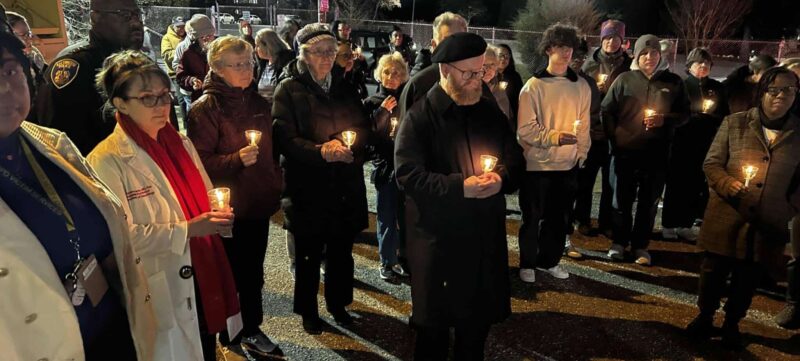

When unexpected suffering and turmoil strikes families in our communities, Grief Ministry steps into action. In June 2025, this transformational ministry marked four full years of service to those who have suffered the pain and disruption caused by violence in Baltimore City. One afternoon this past August, I met with its director, Yvonne Wenger, to talk about how the ministry has grown and how it continues to walk alongside families who face the unimaginable. As we spoke, she described both the structured rhythms that keep the ministry steady and the deeply personal decisions that allow it to adapt to the needs of each grieving family.
The ministry was founded with two clear goals: to offer direct support to households mourning the sudden loss of loved ones, and to foster peace by creating stronger ties between survivor advocates, relief services, and parish communities. These goals remain urgent. Since its founding, the Grief Ministry has reached over 600 households and supported more than 900 children as they process the effects of violence. During the same period, Baltimore has seen its homicide rate begin to decline — from 261 in 2023 to 201 in 2024, with another significant drop recorded in 2025. The trend is encouraging, but numbers alone do not tell the full story. Every single loss leaves behind a family suddenly burdened with grief — children without parents, grandparents stepping in to raise a new generation, neighbors and friends mourning in the aftermath.
What struck me in our conversation was how carefully the ministry balances faith and action. Every month, pastors across the archdiocese receive the names of those who have lost their lives so they can be remembered during the Prayers of the Faithful. This rhythm of prayer keeps the victims present in parish life, reminding communities that behind every statistic is a person with a story. Volunteers then extend this remembrance in practical ways: writing sympathy notes in the weeks after a death, stocking and preparing groceries at the pantry at Holy Cross Church in South Baltimore, or organizing food drives and fundraisers to keep the shelves filled.
The grocery deliveries are especially powerful because they provide more than food. When a homicide occurs, survivor advocates from the Baltimore Police Department (BPD) or from Roberta’s House often bring these packages directly to families. Roberta’s House is a nonprofit grief support center that specializes in helping children and adults navigate loss with counseling, peer groups, and therapeutic activities. Their staff and volunteers understand how to walk alongside families over time, offering tools to process grief in healthy ways. By pairing their expertise with the tangible gift of food, the ministry creates a gentle first point of contact at a moment when families are reeling.
The BPD’s Homicide Survivor Advocacy Program plays a different but equally crucial role. These advocates accompany detectives in the aftermath of violence, making sure families are treated with dignity, kept informed, and connected to resources they might otherwise never discover. Carrying a bag of groceries prepared by parish volunteers allows them to enter a home with something truly helpful in hand — a gesture that softens the encounter and opens the door to trust. From there, conversations about safety, counseling, housing, or long-term support can unfold in a way that feels less like an intrusion and more like care.
Yvonne emphasized that this combination of prayer and service is not just symbolic but life changing. Still, she was quick to add that every family’s circumstances are different, which is why the ministry must remain flexible. At Thanksgiving, for example, families not only receive full meals but also $25 gift cards, allowing them to choose what matters most for their tables. In one particularly memorable case, the ministry directed resources to support a child who had witnessed violence firsthand. Learning that the child loved horses, the ministry provided financial resources for advocates to arrange for equine therapy sessions that helped the child process the grief and trauma — a costly choice, but one that recognized the child’s individuality and dignity. In another instance, the ministry sponsored four children at a special Roberta’s House summer camp for young people who lost a loved one to violence.
“There’s this idea that the Catholic Church responds to worldwide crises and systemic issues across the world,” Yvonne reflected. “But what about the crisis in each distinct Catholic community? What happens to you matters to us.” Her conviction is what allows the ministry not only to maintain a steady program but to adapt when a child, a family, or a parish requires something more.
She described her transition from journalism into ministry as a chance “to take something that was really more abstract and make it truly impactful.” Her words carry weight when you consider the tangible outcomes: groceries that meet an immediate need, notes that arrive at just the right time, therapy that helps a traumatized child heal, a camp that ensures grieving families can access the services designed for them. These are not abstractions. They are practical but meaningful expressions of faith made possible by generosity.
That generosity flows above all from those of us who are called to serve in our Catholic community. Without this support, the pantry shelves would be bare, the notes unsent, the advocates unable to bring food into grieving homes. With it, the Church can respond quickly and faithfully when tragedy strikes.
Yvonne put it plainly: “This ministry is a channel for us to show God’s love.” The channel runs through every parish that prays, every volunteer who writes, every donor who contributes. It shows itself in the food delivered to a grandmother suddenly caring for her grandchildren, in the letter that reaches a family on the anniversary of their loss, and in the therapy that restores hope to a child who thought life would never feel safe again.
The Grief Ministry reminds us that the Church is not distant from the suffering of its people. It is present in parish pews, in handwritten notes, in groceries carried into kitchens, and in the careful attention given to each unique circumstance. This is what answering the call to serve our community can make possible: a Church that does not turn away from grief but enters into it with love, reminding families that their sorrow matters, that they are not alone, and that God’s compassion endures even in the most difficult seasons of life.
