Home Page

Pope, Catholic media workers strategize

VATICAN CITY – Taking advantage of new media to spread the Gospel, the Catholic Church also has an obligation to point out areas where the media has a harmful effect, especially on children, Pope Benedict XVI said. The pope called on media operators “to safeguard the common good, to uphold the truth, to protect individual human dignity and promote respect for the needs of the family.” Meeting March 9 with members of the Pontifical Council for Social Communications, Pope Benedict spoke of the benefits of greater access to quality entertainment, information and educational opportunities through the media.
U.N. women’s group’s work not yet complete

UNITED NATIONS – While lauding the U.N. Commission on the Status of Women for adopting resolutions on ending female genital mutilation and addressing forced and early marriage, its work is not complete until it also addresses “the important issues of prenatal sex selection, infanticide and son preference,” said Archbishop Celestino Migliore, the Vatican’s permanent observer to the U.N. “The practice of sex selective abortions is not a new practice. The international community has raised this issue during the major conference on women. Even recent reports by the U.N. secretary-general have continued to raise this as an issue of concern that must be addressed,” said Archbishop Migliore in a March 7 statement.

Federal funding urged for cord-blood collection

WASHINGTON – Lack of federal funding could jeopardize therapeutic advances made in using umbilical cord blood for curing diseases, said Richard Doerflinger, deputy director of the U.S. bishops’ Secretariat for Pro-Life Activities. Doerflinger told Catholic News Service that the bishops supported the 2005 law which authorized funds for collecting and storing cord blood and for the establishment of a National Cord Blood Inventory which would enable doctors to match patients with compatible donors through a centralized computer data bank.

Bill would allow doctor-assisted suicide in Vermont

MONTPELIER, Vt. – Father Jay C. Haskin agrees with Vermont Gov. James Douglas that Vermont should become an “e-state.” But unlike the governor’s “e” for electronic, Father Haskin’s “e” stands for ethical. “Vermont is in a unique position to lead the nation in becoming an e-state – an ethical state,” Father Haskin said at a Vermont Senate Health and Welfare Committee public hearing on physician-assisted suicide at the Statehouse in Montpelier Feb. 27. The bill would allow physicians to assist in the death of terminally ill patients.

‘Live out Love’ theme of congress event for youths

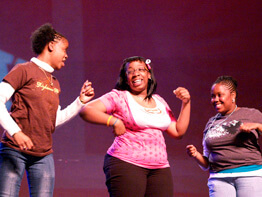
ANAHEIM, Calif. – Youth Day kicked off the 2007 Los Angeles Religious Education Congress with three eucharistic liturgies, 13 workshops and a closing, high-decibel rally at the Anaheim Convention Center. The March 1 all-day gathering, which preceded the March 2-4 congress, drew nearly 15,500 teenagers and young adults from 510 different youth groups. The theme was “Live Out Love.” At a morning liturgy in the packed arena, Cardinal Roger M. Mahony of Los Angeles called Youth Day a “great joy” because it brought together so many thousands of young men and women committed to Jesus.

Red Hot Mamas heat up Good Samaritan

The 100 ‘Red Hot Mamas’ who gather at Good Samaritan Hospital, Baltimore, one Wednesday each month know exactly what it’s like to feel the heat. That’s why the women find it helpful to come together for the monthly seminar which focuses on issues before, during and after menopause. The menopause seminars have become such a hot topic that additional sessions have been added to accommodate the women on the waiting list.

Parishioners in the archdiocese donate blood often

Sue Miller is a champion. A plaque proves it on the Wall of Champions at Good Samaritan Hospital, Baltimore, and her hospital ID badge announces it as well. Attached to her badge by a gold pin, the garnered award reads, “Putting you first” with “Champion” scrawled across it. “I wear it on my ID badge proudly,” the Immaculate Heart of Mary, Baynesville, parishioner said of the Good Samaritan Champion award, bestowed on hospital employees who go beyond the normal scope of duties in the community or inside the hospital.

Jews react strongly to remarks made by German bishops

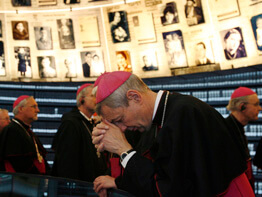
COLOGNE, Germany – Remarks made by German bishops during a recent visit to the West Bank have caused a storm of reaction from Jewish leaders in Germany. The Central Council of Jews in Germany and the Israeli Embassy responded angrily to comments by Bishop Gregor Hanke of Eichstaett, who compared the situation of Palestinians in Ramallah with that of Jews in the Warsaw ghetto in Poland during World War II. For his part, Bishop Walter Mixa of Augsburg described the Israel-Palestinian situation as “almost racism.”

Social Ministry Convocation focused on call to serve

Last Saturday I stopped by the Social Ministries Convocation at Seton Keough High School. Bishop Mitchell Rozanski accompanied me in the visit; Bishops Malooly and Madden came by later in the day. This gathering, organized by Monsignor William Burke with the help of a special committee, brought together hundreds of people from around the Archdiocese to focus on the Gospel call to serve the poor and those in need. Speakers and group meetings dealt with different areas of concern.

Polish archbishop, officials ignored child sex abuse

OXFORD, England – A Polish newspaper has reported that diocesan officials and an archbishop ignored cases of pedophilia and sex abuse of minors by priests in the Diocese of Plock, Poland. The Rzeczpospolita daily reported March 6 that Archbishop Stanislaw Wielgus and other officials of the diocese had been kept informed for at least six years by pastors of victims’ parishes about priest sex abuse of minors. Archbishop Wielgus was the head of the Plock Diocese from 1999 until he was appointed to head the Archdiocese of Warsaw in January. He quickly resigned after admitting he had collaborated with the communist secret police.

Rules and regulations for giving blood

One out of every three people will need blood in his or her lifetime. The United States alone uses 38,000 units of blood each day. Each unit of blood given can help up to three people, and yet less than 5 percent of healthy Americans actually donate blood, reported Dr. Moira Larsen, a pathologist at Good Samaritan Hospital, Baltimore.

The faithful answer the call to donate live-saving blood

Marylanders are taken to hospital emergency rooms in need of care every day and doctors throughout the state are ready to help save their lives, but that task might be impossible without blood donors. Parishes throughout the Archdiocese of Baltimore are calling on the faithful to pull up their sleeves and literally give of themselves to make sure the supply of blood is plentiful for those in need. St. Ignatius, Hickory, hosts the Greater Chesapeake & Potomac chapter of the American Red Cross every January and September, times when the demand for blood is traditionally at its greatest, said Debbie Czawlytko, R.N., the pastoral associate and parish nurse.

En español »