as seen on wbaltv.com

A Teacher’s Account: Why Catholic Schools Top the Nation

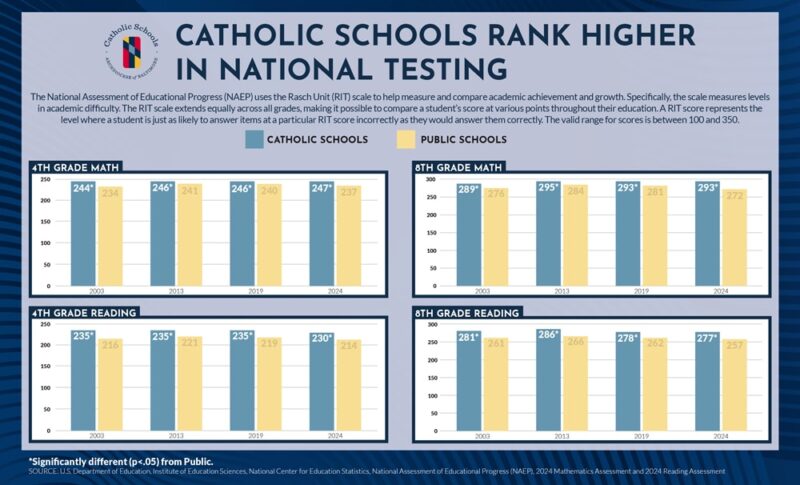
If Catholic schools were their own state in the U.S., they would rank first for the performance of students in grades 4 and 8 in both math and reading, according to the Nation’s Report Card.

The results released this year by the National Assessment of Educational Progress show the outcomes and student achievement in Catholic schools – like where I teach at St. Casimir Catholic School in Baltimore – have defied some of the struggles students in our country have experienced, especially post-pandemic.

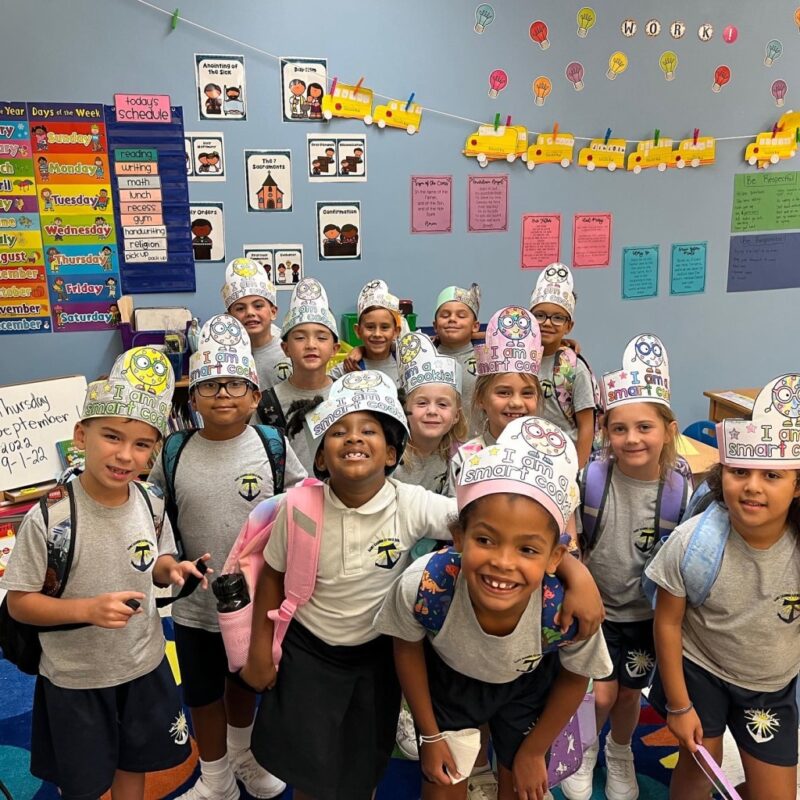
The author’s classroom of first graders from St. Casimir Catholic School

I’ve been a teacher for nearly 30 years, working in both public and private schools. This is my seventh year at St. Casimir’s, and I write to offer reflections on what I think we get right that contributes to the notable achievements of our students and overall outcomes that are emblematic of the Catholic school experience.

In our 123-year-old school, we educate the children of doctors at the Johns Hopkins Hospital and hospitality workers at the Inner Harbor – and families at all income levels in between with a quarter of children receiving some form of financial aid. About half are Catholic, half are not. Our students are white, Black and Hispanic, and each one entrusted to our care has individual talents and weaknesses.

I believe the steady and admirable progress of students in the Archdiocese of Baltimore’s Catholic schools comes not from their ability to score “basic, proficient or advanced” on a national or state assessment but from the environment fostered on our campuses.

At St. Casimir’s, the day starts as nearly 300 children in prekindergarten to eighth grade arrive in their school uniforms. They walk to school from their rowhouses in our bustling Southeast Baltimore neighborhood, ride up on their scooters or get dropped off by their parents. Greeting them at the front doors are their teachers, the principal and other trusted adults. The sense of community and morning routine gets the day started on a good note.

Prayer is a daily part of life in Catholic schools. In my classroom, like you will find in all Catholic schools, I have set up quiet places for contemplation where students can go to pray and take some time in silence – to breathe and be still. Prayer can bring hope to their hearts and help the children develop a deep and unwavering belief in their own inherent worth. Heading to Mass once a week also helps our students grow in their faith and build a personal relationship with Jesus.

We teach students that it’s okay to make mistakes and learn lessons along the way that make us better. Through this approach, students feel welcome and safe as they reach their potential and develop their relationship with Christ. Joy in our schools is apparent in the atmosphere.

Another key element to Catholic education at St. Casimir’s and across the United States is our emphasis on service. Our schools are regularly finding ways for the students to give back to the community whether that is planting flowers in Canton square, making lunches for the Beans and Bread soup kitchen or picking up trash from sidewalks and storm drains.

It is my job as a first-grade teacher to set the foundation for the assessments, like the ones given for the Nation’s Report Card. What we know based on the data is, the younger a child is when he or she enrolls in Catholic school, the stronger their performance on National Assessment of Educational Progress and other measurements.

The achievement of Catholic school students has been celebrated not only on the Nation’s Report Card. Remarkably, half of all public and private schools in Maryland recognized with the prestigious Blue Ribbon in 2024 were Catholic schools in the Archdiocese of Baltimore. Other measures also objectively show the value of the education in our schools, including a graduation rate that is no lower than 99.9% with the majority of young people continuing on to college or military service.

Nearly 25,000 students attend Catholic schools in the Archdiocese of Baltimore with opportunities to enroll extended to many families by the $9 million investment of the state legislature through the BOOST scholarship, in addition to other tuition assistance provided by the Catholic community.

For most parents, sending their children to Catholic school comes with a financial sacrifice, and as teachers, we work hard to prepare the students to grow, intellectually and spiritually, lead with compassion and integrity and serve one another in Christ. Outcomes like those found on the Nation’s Report Card show that we are, indeed, doing just that.

Patricia Shortall is a first grade teacher at St. Casimir Catholic School in Baltimore.
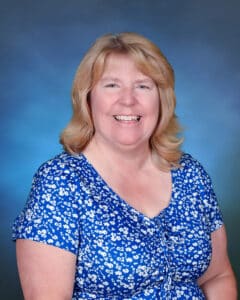
The author, Patricia Shortall, is a first-grade teacher at St. Casimir Catholic School with three decades of experience in both private and public school settings
En español »